Every crew working at height has seen the same rescue plan: one line, in a binder, reading “in the event of a fall, call emergency services.” It gets signed. It gets filed. It has never been read by anyone who would have to carry it out.
The problem is not the paperwork. It is that a worker hanging in a harness is on a clock, and the first few minutes belong to the people already on site.
Start with the question the plan has to answer
If the person on that rope cannot get themselves down, who gets them down, how, and with what — starting now?
Everything in a good plan is there to answer that. If a line in your template does not help answer it, it is filler.
The parts worth writing down
Who does the rescue. A name or a role that is actually on site for the whole shift, not “the supervisor” when the supervisor is two buildings away. If your rescue depends on one person, write down what happens when that person is the one who needs rescuing.
The method, in order. Lower to grade, raise to the anchor, pick-off from a second rope, aerial lift, or recovery by the fire service. Most jobs have a first choice and a fallback, and the fallback is usually the one that gets used.
The equipment, and where it is. “Rescue kit” is not a location. “Rescue kit in the blue bag, clipped at the north anchor, checked this morning” is. If the kit is in the van and the van is at the far end of a parkade, your plan has a fifteen-minute gap in it.
Access and timing. How does the rescuer reach the casualty, and how long does that realistically take from where they are standing? Include the walk, the stairs, the elevator that needs a fob and the door that is locked after six.
Suspension trauma. What the crew does while the casualty is still in the harness, and what happens after they are down. This is the part most plans skip, and it is the part with a clock on it.
Emergency services. Still in the plan — but as the escalation, with the site address as a dispatcher would need it, the nearest accessible entrance, who meets them, and who has the gate code.
Communication. Who calls, who stays with the casualty, who clears the area below, who calls the office. Assign it in advance and the first thirty seconds do not get spent deciding.
Write it for the site, not for the binder
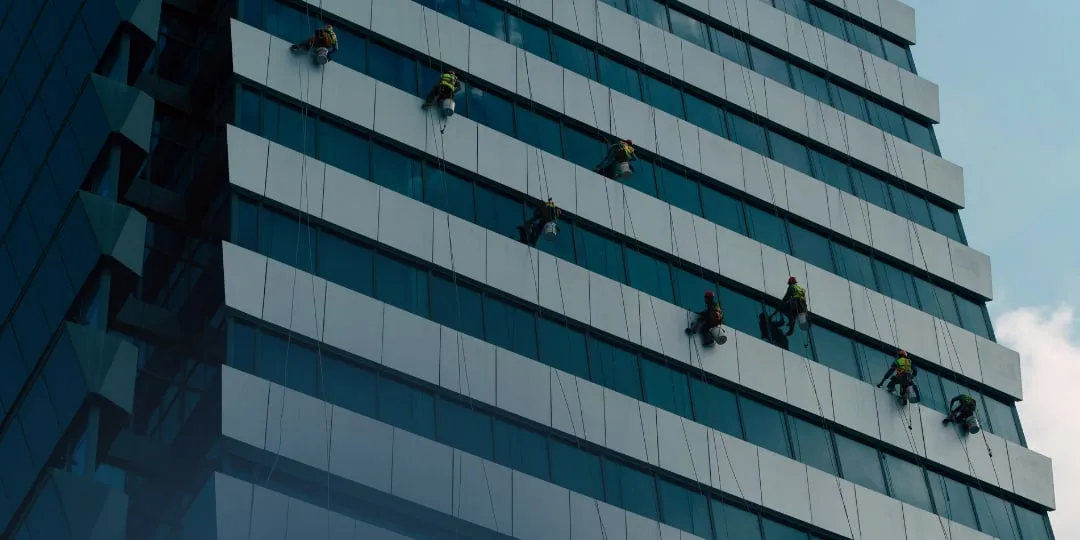
A rescue plan for a fifteen-storey glass facade is not a rescue plan for a parkade ceiling or a communications tower. The geometry changes everything: where you can rig from, whether a lift can reach, whether the casualty can be lowered past an obstruction.
That is why the plan belongs with the job, dated, rather than in a company binder from four years ago. If the anchors moved, the plan changed.
Test it once, on a normal day
The first time a crew tries a pick-off should not be the first time it matters. A practised rescue takes a fraction of the time of an improvised one, and running it once tells you the things paper never will: that the rescue kit is short of rope for the drop, or that the spare descender is the wrong one for the line size.
Write down that you ran it, and when. That record is worth more to an auditor than a tidy template, and worth far more to the person on the rope.
What regulators expect on paper
The detail varies by jurisdiction, and it is worth reading what applies to yours rather than working from a rumour. Broadly, where workers use a fall protection system, the written plan is expected to cover the rescue arrangements for that specific work, and it is expected to be available at the work site — not at head office.
Our requirements finder sets out what each province, state and city asks to be documented, with the citation, so you can check yours rather than guessing. RopeDocs helps you produce and keep those records; what makes the work safe is the plan being real and the people being trained.
A short checklist
Before the first person goes over the edge:
- The rescuer is on site and knows they are the rescuer.
- The method is chosen for this anchor, this drop, this building.
- The kit is where the plan says it is, and it was checked today.
- Someone has thought about the time from alarm to hands-on the casualty.
- The crew has read it and signed it — on the job, not in the office.
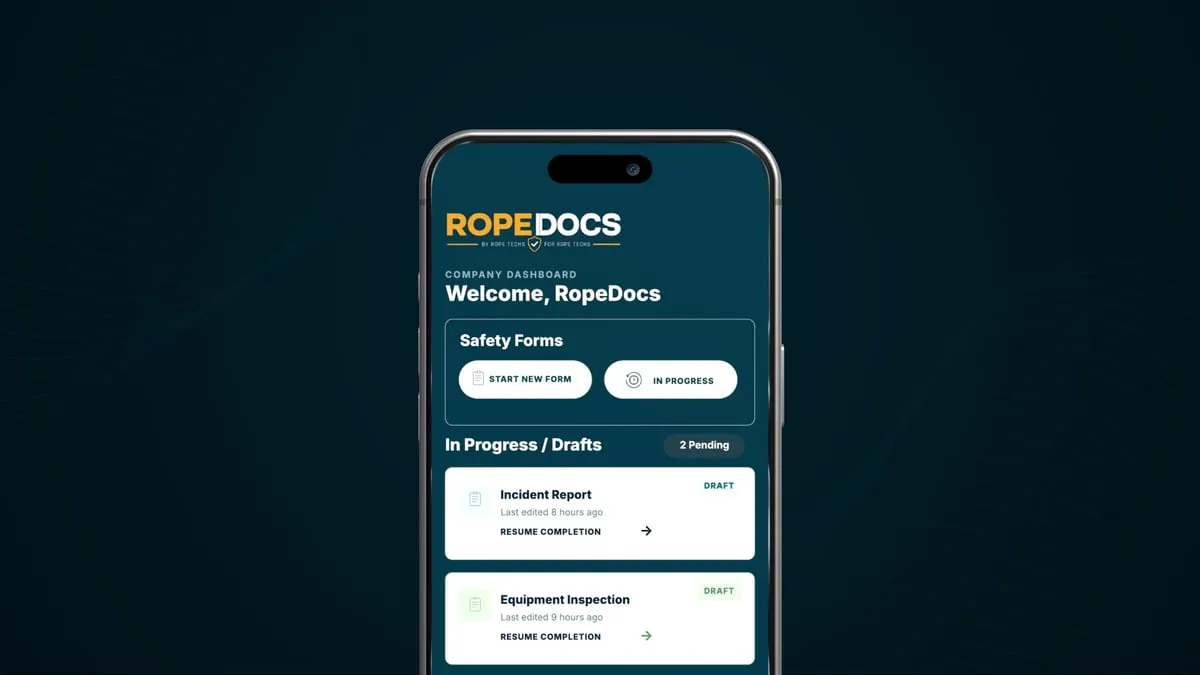
In RopeDocs, the rescue plan sits with the job alongside the hazard assessment and the equipment inspections, gets signed by the crew on the supervisor’s phone, and comes out as a PDF you can hand to the client before work starts.