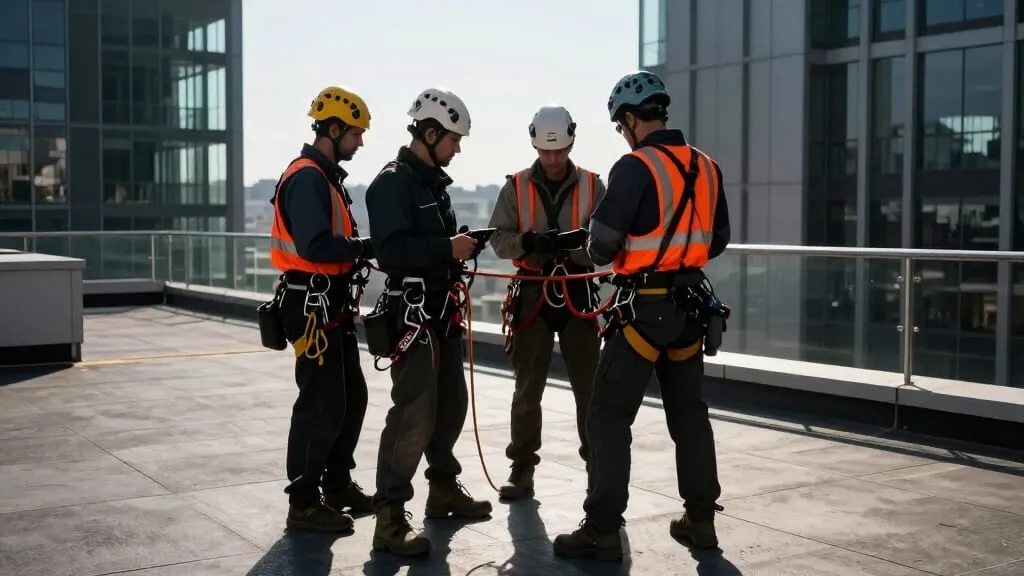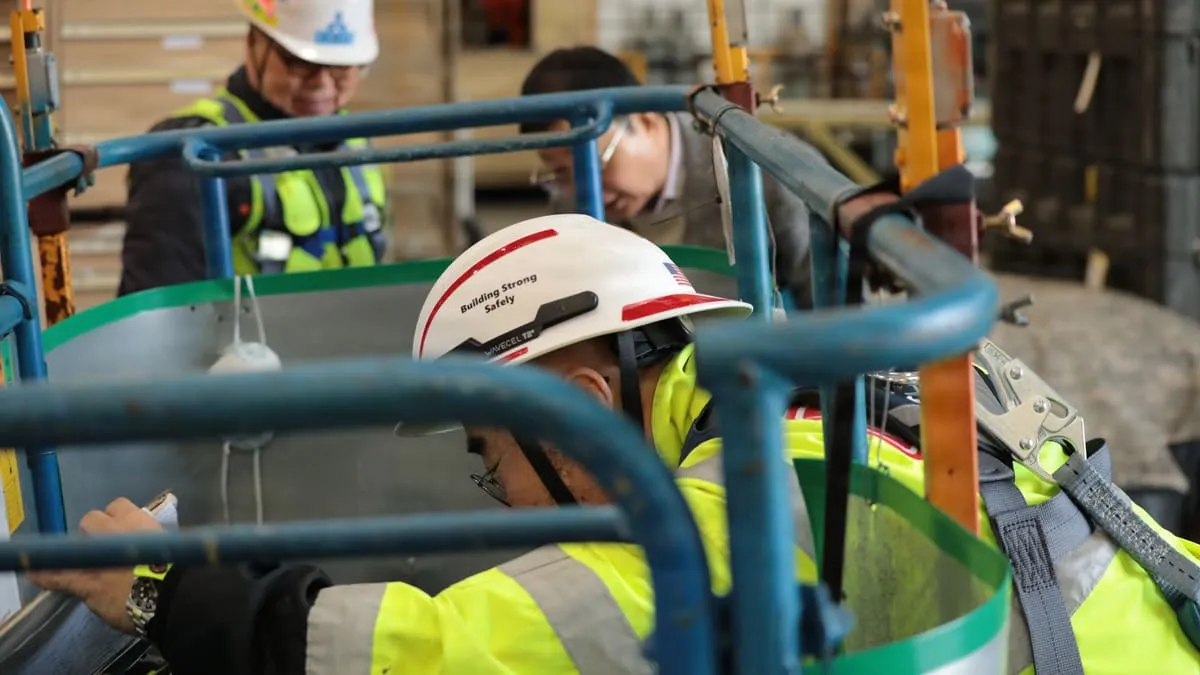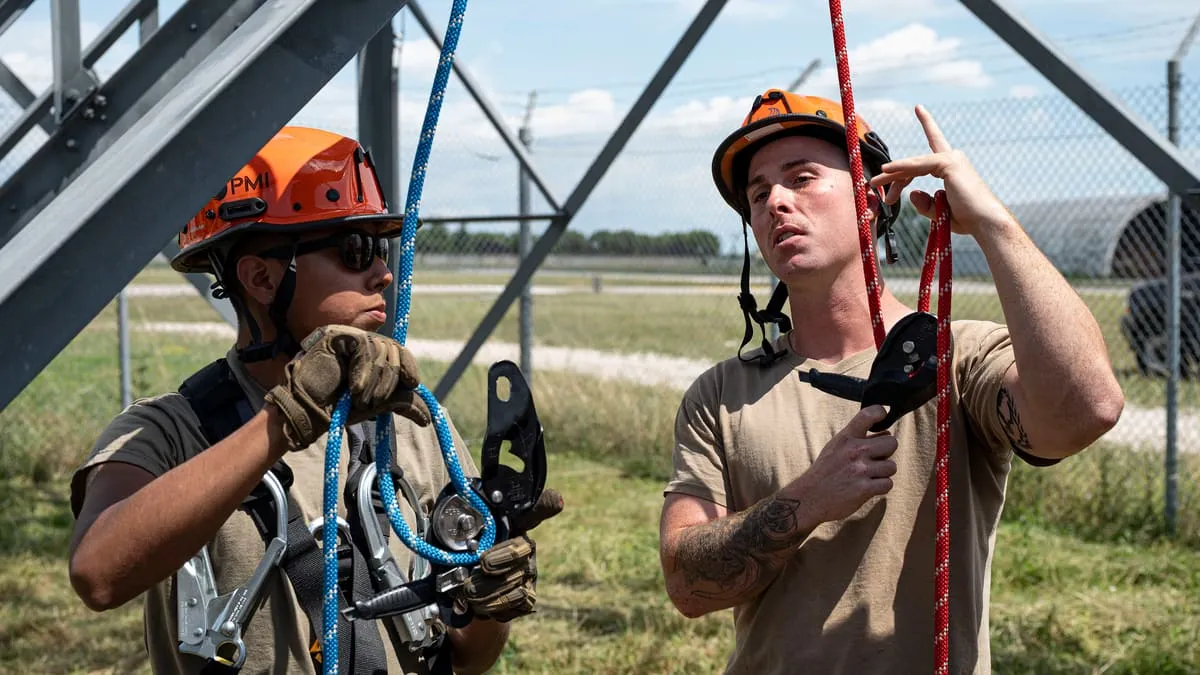
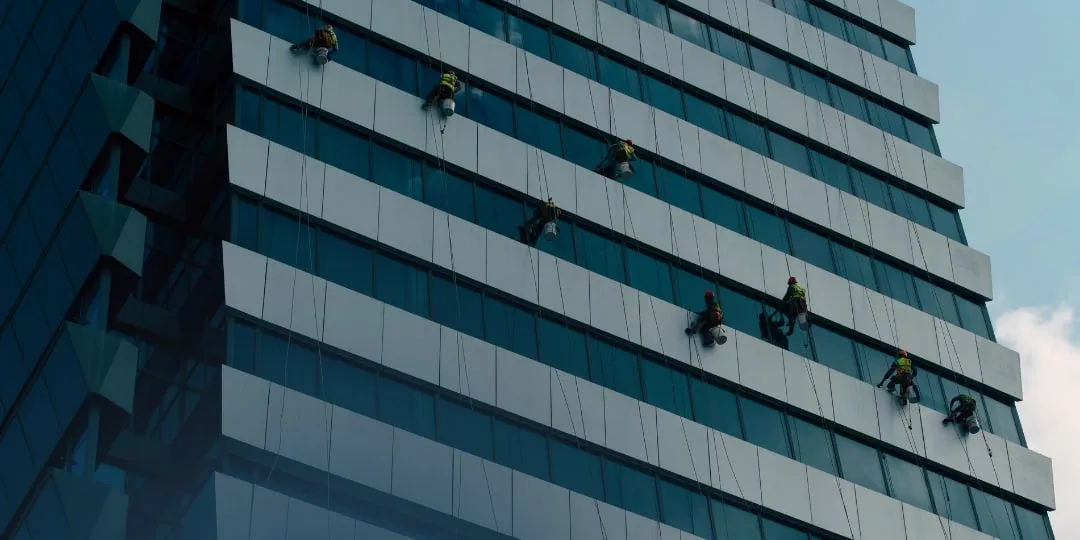
Swing stage vs rope access documentation differs in three places: the equipment you inspect, the papers the building owner owes you, and what you must write down about training. The hazard assessment and rescue plan change too, because the hazards change.
This post covers federal OSHA rules for building work in the United States. Provinces and states have their own, and our requirements finder sets out what each one asks you to document.
Which OSHA rules apply to each method?
- A temporary swing stage, a two-point suspended scaffold rigged for the job, is a scaffold. In general industry, 29 CFR 1910.27(a) sends you to the construction scaffold rules in 29 CFR 1926 Subpart L.
- A permanently installed building maintenance platform, the kind that lives on the roof of a tower, falls under 29 CFR 1910.66, which says it does not cover temporary swing stages.
- Rope access on a rope descent system in general industry falls under 29 CFR 1910.27(b).
Three methods, three sets of rules. One generic “work at height” form will miss something in each.
What does the equipment inspection cover?
Both methods need an inspection before each shift. What gets inspected, and by whom, differs.
On a swing stage, a competent person inspects the scaffold and its components for visible defects before each work shift (1926.451(f)(3)), and checks the suspension ropes before each shift as well (1926.451(d)(10)). Before first use, a competent person evaluates any direct connections to the roof (1926.451(d)(3)(i)), and counterweights are secured to the outrigger beams mechanically (1926.451(d)(3)(iv)). Each person on a two-point stage needs both a personal fall arrest system and a guardrail (1926.451(g)(1)(ii)).
For a rope descent system, the system is inspected at the start of each shift it is used, and damaged equipment comes out of service immediately (1910.27(b)(2)(iv)). Each worker has a separate, independent personal fall arrest system (1910.27(b)(2)(vi)), and the ropes are padded or protected where they could be cut (1910.27(b)(2)(ix)).
So a stage inspection needs lines for the hoists, outriggers, counterweights, tiebacks, guardrails and the name of the competent person. A rope access inspection needs the ropes, descenders, backup devices, edge protection and each worker’s own kit. One checklist does neither job well.
Neither standard requires the inspection to be written down. Clients and insurers usually do, and our post on equipment inspection records covers what is worth keeping.
What paperwork does the building owner hold?
For rope descent, the building owner must tell the employer in writing that each anchorage has been identified, tested, certified and maintained to support at least 5,000 pounds in any direction for each employee attached, based on an annual inspection and a certification at least every 10 years, both by a qualified person (1910.27(b)(1)(i)). No one uses an anchorage until the employer has that statement, and the employer keeps it for the duration of the job (1910.27(b)(1)(ii)). File it with the job before the first drop.
The scaffold sections, 1926.451 and 1926.452, ask for no owner letter. The competent person’s evaluation of the roof connections is the crew’s own work, which is a good reason to write it down.
A permanent platform turns this around. The building owner keeps certification records of the inspections of the supporting structure and equipment, at intervals of no more than 12 months (1910.66(g)(2)(iii)), and of the maintenance inspection every 30 days or before each work cycle (1910.66(g)(3)(ii)). Those records are to be available to the employer, so ask to see them before your crew rides the platform.
What changes on the training record?
Training is required for every method. A written record is not.
For scaffold work, 1926.454 requires training by a qualified person in the hazards of the scaffold being used, and retraining when conditions or performance call for it. It contains no requirement for a written certification record. Rope descent system users are trained under 1910.30, which also sets none.
Permanent platforms are the exception. The employer prepares a certification record with the identity of the person trained, the signature of the employer or trainer, and the date, and keeps it for the duration of that person’s employment (1910.66(i)(1)(v)).
Clients usually ask for a training record anyway. Note which access method each person is trained on: a rope access certificate says nothing about running a stage.
Do the JHA and the rescue plan change?
Yes, because the hazards are different.
A JHA, written at the desk before the job, should name the access method and its hazards. For a stage, that means hoists, power supply, roof rigging and wind: work in storms or high winds needs a competent person’s go-ahead plus fall arrest or wind screens (1926.451(f)(12)). For rope access, it means anchors, edges and rope protection. The FLHA, written at the job on the day, picks up today’s wind, the occupied sidewalk below and the anchor that turned out to be painted over.
Rescue differs as well. For rope descent, prompt rescue must be provided (1910.27(b)(2)(viii)). For a permanent platform, a written emergency action plan covers power failure, equipment failure and other emergencies (1910.66(e)(9)). A stranded stage and a worker hanging on a rope are two different rescues, and the plan should say which one it covers. See what goes in a rescue plan.
Keeping the right records with each job
Each job should carry the records for the method actually in use: the right inspection, the owner’s letter or certification records where they apply, and a JHA/FLHA and rescue plan that name the access method.
In RopeDocs, the crew completes the JHA/FLHA, equipment inspections and rescue plan in the mobile app, on site and offline, and each one becomes a signed PDF kept with the job. It helps you produce and keep the documentation; doing the work right is still down to the crew. The FAQ explains how the app works.
Try it on your next job with the free trial on the home page.