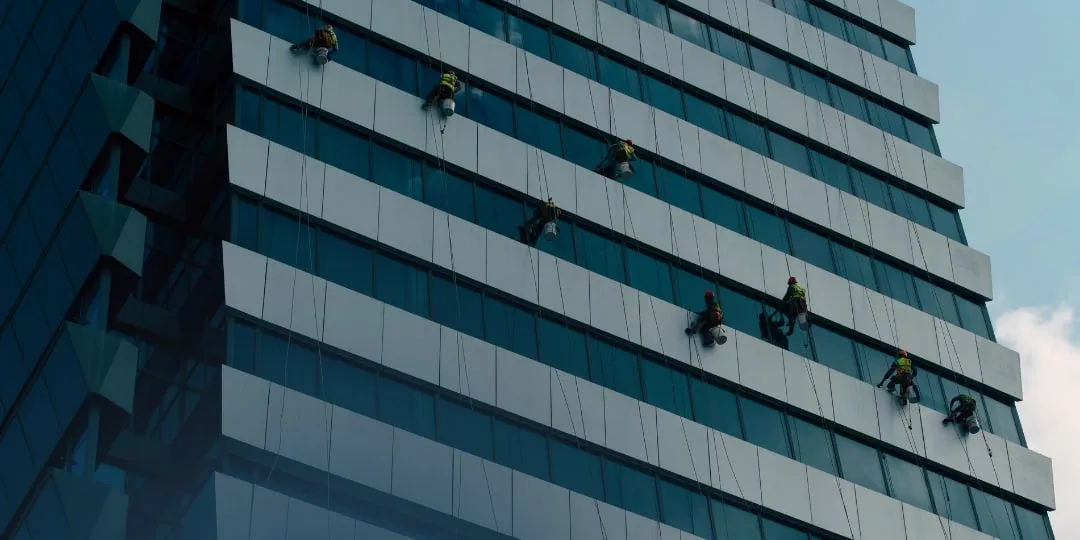
In Alberta, an employer must write a fall protection plan for any work site where a worker could fall 3 meters or more and is not protected by guardrails. Section 140 of the Occupational Health and Safety Code lists six things the plan must cover, and the plan has to be at the work site and reviewed with the crew before anyone works at height.
When Alberta requires a fall protection plan
Both conditions in OHS Code s. 140(1) have to be true: a worker may fall 3 meters or more, and the worker is not protected by guardrails. If either is false, section 140 does not require the plan, although your hazard assessment under s. 7 still applies.
The plan belongs to the work site, not the company. Alberta OHS guidance says that even where several sites have similar hazards, equipment and procedures, each work site needs its own plan. A plan copied from the last job with the address changed misses the point.
Rope access has its own format: a rope access safe work plan under Part 41 of the Code (ss. 808 to 810), which adds the team by name and an emergency response plan. Our requirements page lists those sections for Alberta and the other provinces and states we cover.
What section 140 says the plan must contain
Section 140(2) lists six items. Here is each one, and what a useful entry looks like.
- The fall hazards at the work site. Not “working at heights”, but the places someone could fall: the leading edge of the second floor, the unguarded opening on the third, the boom-supported platform.
- The fall protection system to be used. Fall arrest, travel restraint, fall restrict, a horizontal lifeline, a safety net, work positioning or a control zone. Each hazard gets its own control.
- The anchors to be used. Where they are, what they are installed into and any load limits. The Code sets separate strength rules for permanent and temporary anchors, so say which each one is.
- Confirmation that clearance below the work area is enough. The plan has to confirm that a falling worker would not hit the ground, an object or a level below. Where a site has several work areas, each one needs its own confirmation.
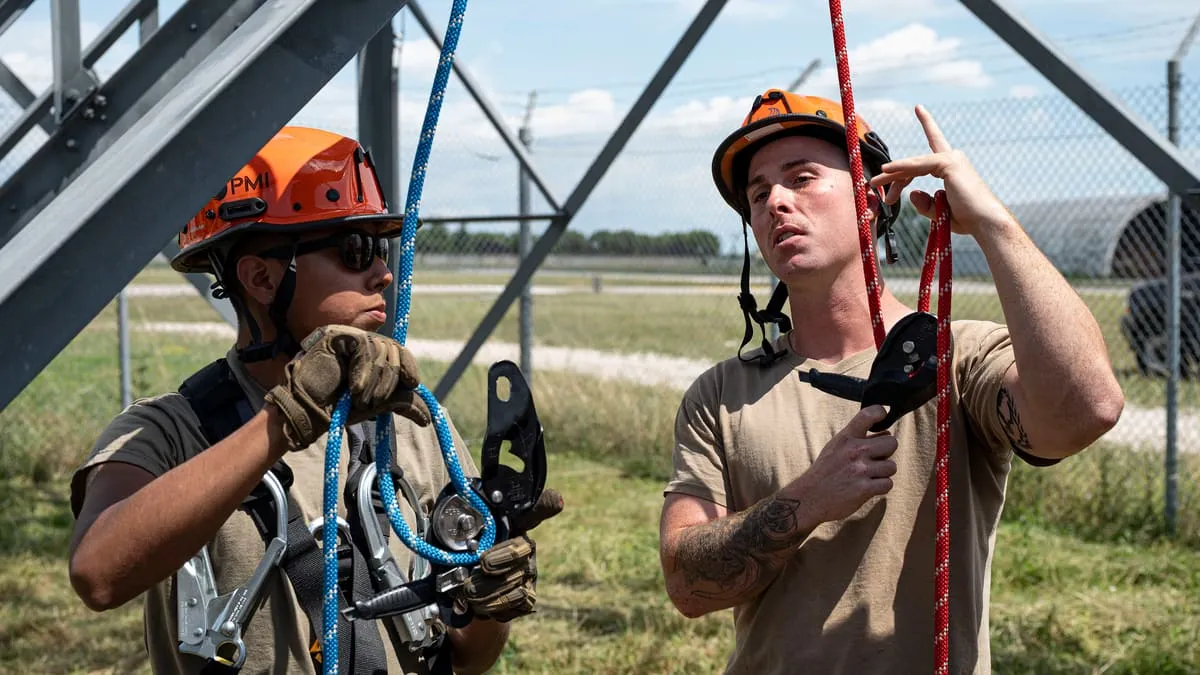
- The procedures to assemble, maintain, inspect, use and disassemble the system. The plan can point to the manufacturer’s instructions, provided they are at the work site and reviewed with the workers.
- The rescue procedures if a worker falls and is left suspended. By a personal fall arrest system or a safety net, waiting for someone to get them down.
Clearance: show the working
Item four is where plans most often say “confirmed” with nothing behind it. Alberta’s guidance includes a worksheet for a fixed-length lanyard system. It adds up the distance from the anchor to the rope grab plus the lanyard length, the shock absorber’s extension, harness stretch and D-ring slippage, the height of the worker’s D-ring above their feet, and a safety factor, then compares the total with the actual distance to the nearest surface below.
Fill it in for each work area and keep the numbers in the plan. If the total is longer than the distance available, the answer is a different anchor or a different system.
Rescue: “call 911” is not the plan
Alberta OHS is clear that calling emergency services may be part of a rescue response, but the employer still needs some means of rescue at the work site in case help is delayed or cannot reach the worker. Its examples include a lift or ladder that can reach the suspended worker with someone able to use it, suspension relief straps on harnesses, a self-retracting device with a rescue winch, and self-rescue descenders where they suit the work.
Name the people, the equipment and where it is kept. The rest is in what goes in a rescue plan for work at height.
On site, reviewed and kept current
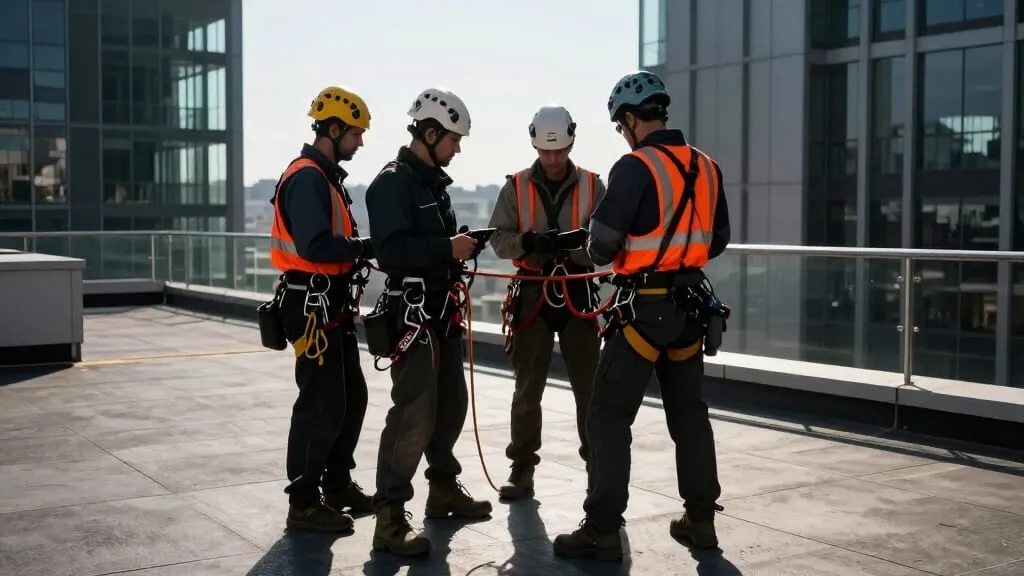
Section 140(3) requires the plan to be available at the work site and reviewed with workers before work with a risk of falling begins. Section 140(4) requires it to be updated when conditions affecting fall protection change: new anchors, a new device with different procedures, or a different approach altogether.
The Code does not say how to prove the review happened. Alberta’s sample template uses a worker sign-off and leaves the method to the employer. A dated list of names and signatures is what you will want when someone asks.
One detail in the guidance is easy to miss: procedures kept on a phone or tablet count, as long as they open without an internet connection.
Is there an Alberta fall protection plan template?
Yes. Alberta OHS publishes a free fact sheet with a sample template, Fall protection plan (GS010), updated in February 2023. It covers the six items, the clearance worksheet and a worker sign-off. Alberta’s advice is to customize it to your work and site, which is the part a blank template cannot do.
A quick check before you sign it
- Does every fall hazard name a place on this site?
- Is there a control for each hazard, not one for the whole job?
- Does each anchor say where it is and what it is fixed to?
- Are the clearance numbers written down for each work area?
- Does the rescue section name people and equipment that are on site today?
- Has the crew reviewed it, and is that review dated and signed?
Where RopeDocs fits
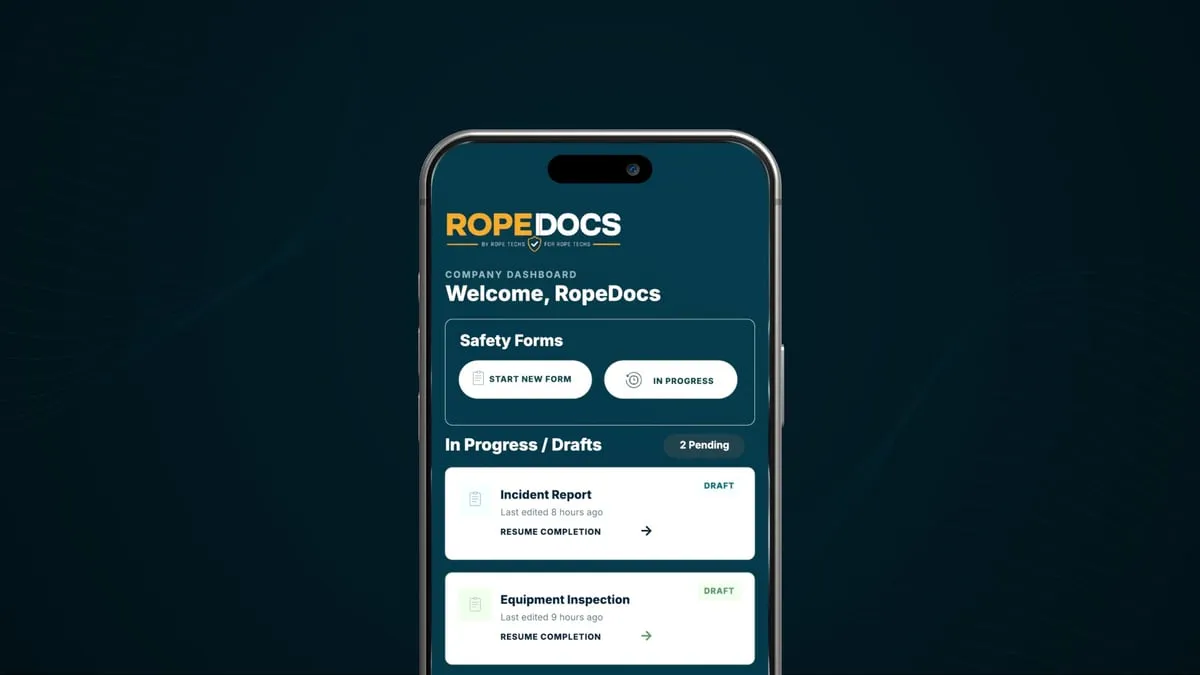
RopeDocs does not write the plan for you. It keeps the paperwork around it together: the hazard assessment, the rescue plan and the crew’s signatures, filled out on a phone at the job, even with no signal, and filed as a dated PDF when it syncs. See how the JHA and FLHA fit alongside the plan, or try it with the free trial.