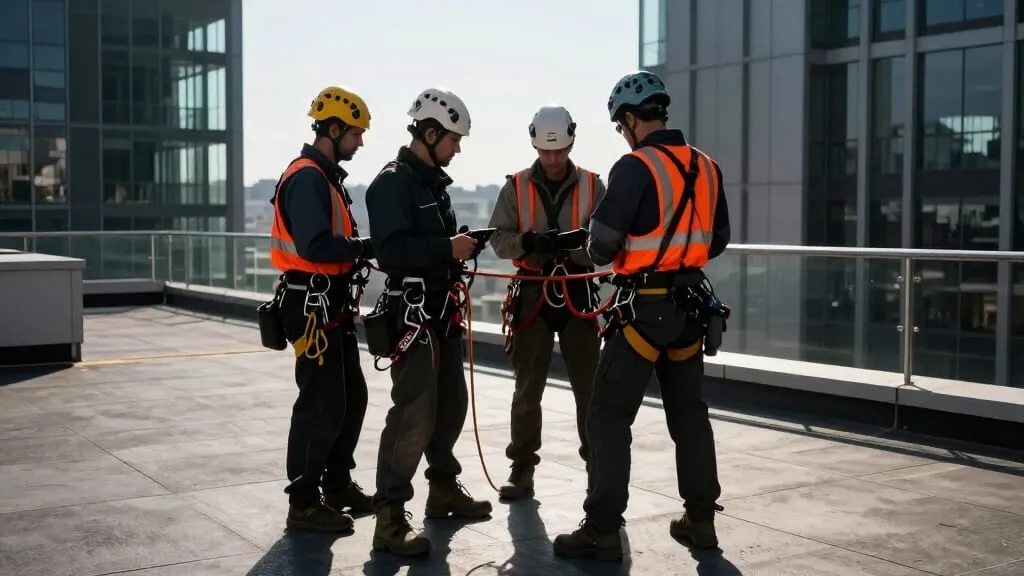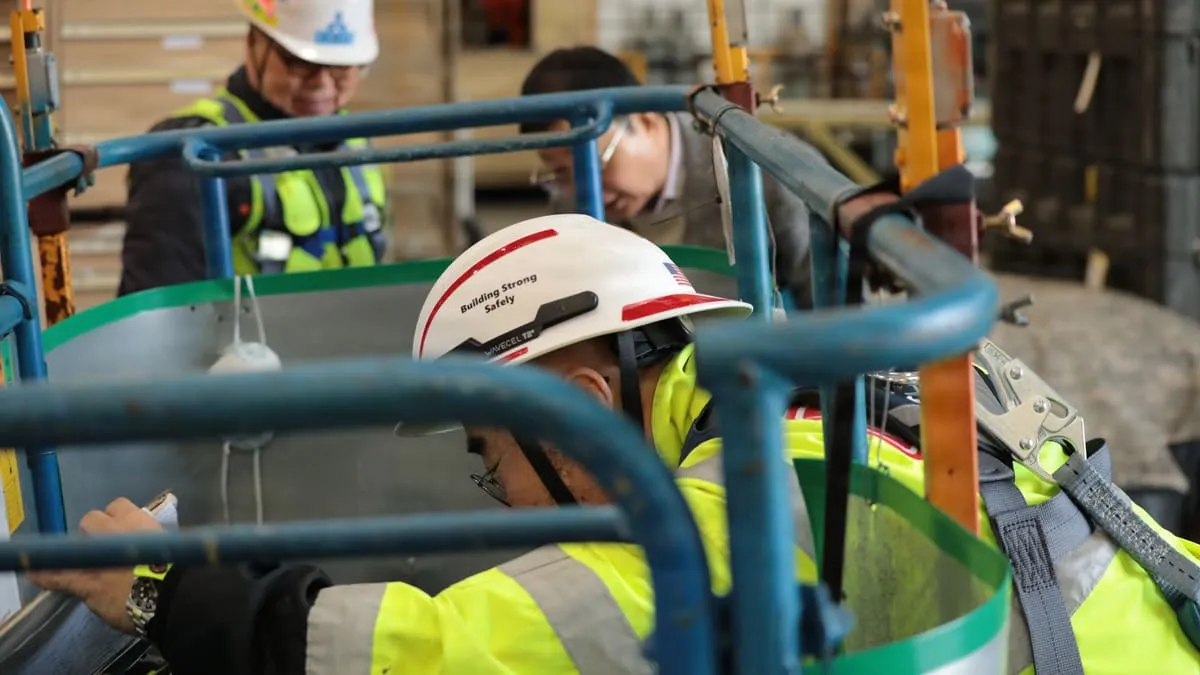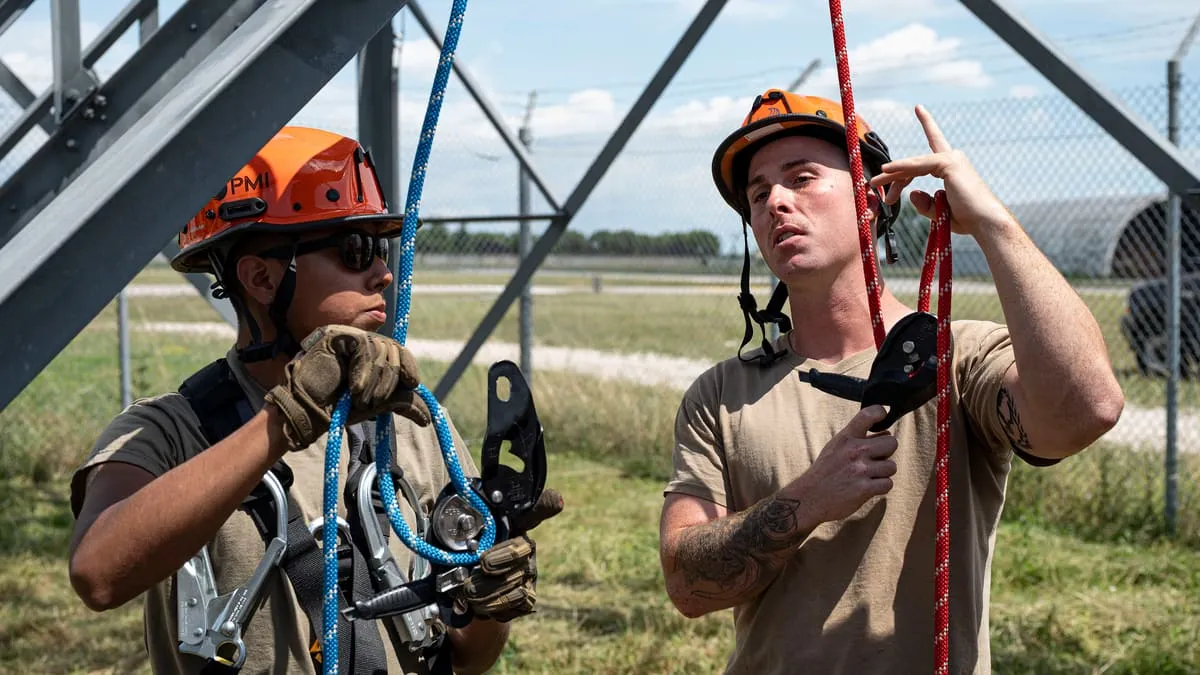
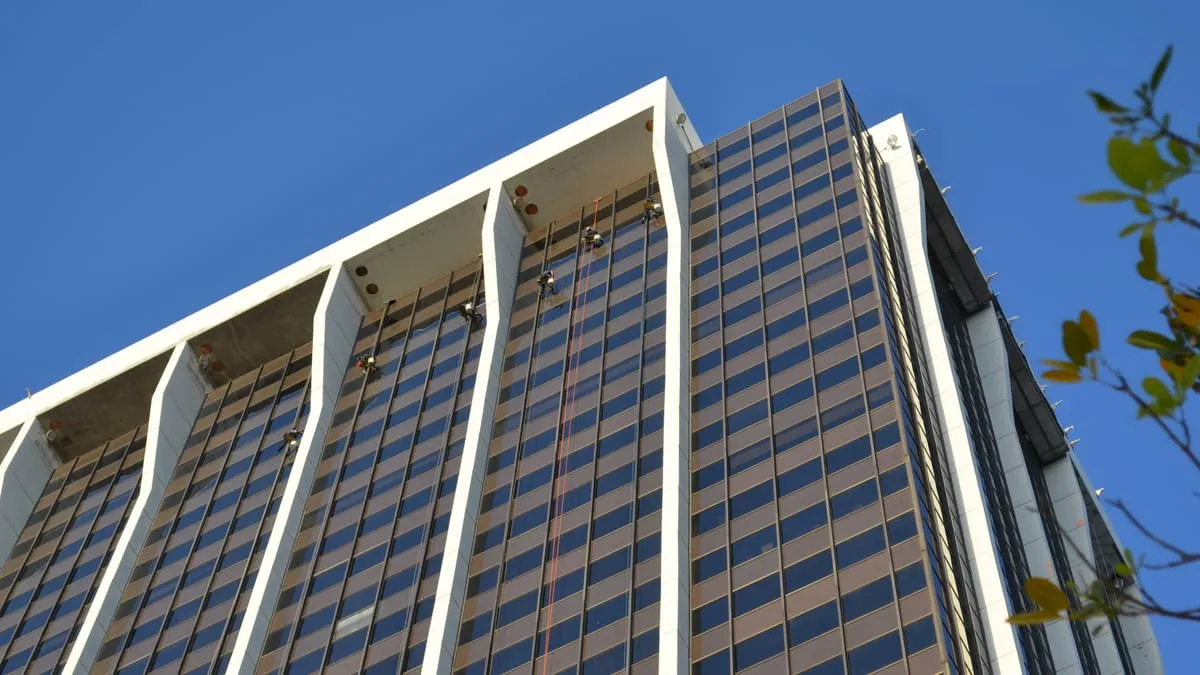
The best toolbox talk topics for window cleaning come from the building you are about to drop, not from a list of generic safety subjects: the wind on that roof, the sidewalk under that elevation, the coping your ropes run over. Pick one hazard the crew will actually meet today, talk it through with the people who will be on the ropes, and record the date, the topic, who led it and who signed.
A talk about “ladder safety” read off a sheet on a high-rise roof teaches the crew that the talk is a formality. It earns its place when a technician walks away knowing something about this job they did not know at the van.
Where good topics come from
You already have the raw material. The hazard assessment for the job lists what is different about this building: the JHA written at the desk before the job, and the FLHA written on the roof this morning about today’s conditions. If you have not drawn that line clearly for your crew, our post on FLHA vs JHA covers it.
Read the FLHA, pick the item most likely to hurt someone today, and make that the talk. Then ask the crew what they saw on the walk up. The person who noticed the loose cap on the parapet is the person who should explain it.
Ten toolbox talk topics for window cleaning
Each of these comes up on real buildings. Use the one that fits the day.
- The wind call. Who decides to stop, what they are watching, and what happens to a drop that is half done when the call is made. Agree it before anyone is over the edge, not during a gust.
- The exclusion zone below. Where the barriers go, who watches the door that opens onto the drop, and what the ground person does when a pedestrian walks under the barrier anyway.
- Dropped objects. Tool lanyards, tethered buckets, and what stays off the rope entirely. A squeegee from thirty floors is not a small object.
- This roof’s anchors and tie-backs. Which anchors are rated and identified, which are not to be used, and where each drop rigs from. Compare the anchor tags with what the building gave you.
- Edges and rope protection. The coping, the window washing track, the corner of the mechanical penthouse. Where the rope protectors go, and who checks them before the second drop.
- Things on the facade. Balconies, setbacks, signs, canopies and the open window on the eleventh floor. What changes in the descent at each one.
- The rooftop itself. Exhaust fans, slippery membrane, unguarded hatches, the walk between the access door and the first anchor.
- Talking to the ground. Radio checks, hand signals when the radio fails, and who is responsible for knowing where every person on a rope is.
- The rescue plan for this drop. Who does the pick-off, from which anchor, with which kit, and where that kit is right now. If the answer is “in the van”, change it before work starts. The rescue plan post goes through what belongs in it.
- The cleaning solution and the water. What is in the bucket, what it does to skin and eyes, and what it does to the sidewalk below when it runs off.
A crew that works the same building every quarter can rotate through these. A crew on a new building should start with 4, 9 and 1.
How to run it so it is worth the time
Keep it short and keep it on the roof, near the drop, where people can point at things. One topic, not five. Ask a question and wait for an answer. If a technician raises something you had not thought of, that is the most useful thing that will happen all morning: add it to the FLHA.
If the talk changes the plan, say so out loud and write it down. A barrier moved to the other side of the entrance is a control. It belongs in the hazard assessment, not only in someone’s memory.
How to record attendance
The record is what makes the talk count later, when a client, an insurer or an inspector asks what the crew was told before a drop. Capture:
- The date and the job, meaning the building and the address, not just the client’s name.
- The topic, in words specific enough to be useful. “Wind call on the north elevation” says more than “weather”.
- Who led it.
- Who attended, each person signing for themselves.
- What the crew raised, and any change it led to.
Keep it with that job’s other records, next to the hazard assessment and the rescue plan for the same day.
What the rules say about the record
Requirements vary by jurisdiction, and toolbox talks are rarely named in regulation. Some places do require a record of instruction. In Ontario, for example, O. Reg. 213/91 s. 26.2(2)–(4) requires a written training and instruction record for fall protection, with the worker’s name and the dates, signed by whoever gave it. A toolbox talk does not replace that training. Our requirements finder sets out what each province, state and city asks to be documented, with the citation, so you can check yours.
In RopeDocs, the toolbox talk is a form the supervisor completes on a phone in the mobile app, on the roof, and each person signs it there. It is kept with the job alongside the FLHA, the inspections and the rescue plan, and it comes out as a dated PDF. RopeDocs helps you produce and keep the record; what makes the drop safe is the conversation.
If you want to try it on your next building, the free trial is on the home page.